from a source to a sourced artifact.
in an afternoon.
Humanities and design students have the ideas and the reading; code is the wall between them and a real, shareable artifact. MakeMode Humanities removes it: describe an interactive essay, an image atlas, or a reading room and watch it build, grounded in genuine primary sources from a 17,000-book European library, with citations. It runs on infrastructure your programme is actually allowed to deploy.
grounded in real sources, not invented ones.
The difference between a mockup and a scholarly artifact is whether the sources are real. Every build can search Source Library — a European library of ~17,000 scanned and translated historical works — and pull genuine covers, page scans, passages and citations straight into the page. No fabricated quotes, no placeholder scholarship.
real works, real scans
Search a theme and get actual books — cover and page scans from images.sourcelibrary.org, with author, date and a link back to the source.
verbatim text, honestly cited
Pull a real translated passage next to its original language, each with a stable citation link — the words are the source's, never the model's.
one link is the artifact
Publish and share a working essay, atlas or reading room — clickable, cited, and hosted in Europe.
described in a sentence. sourced in a minute.
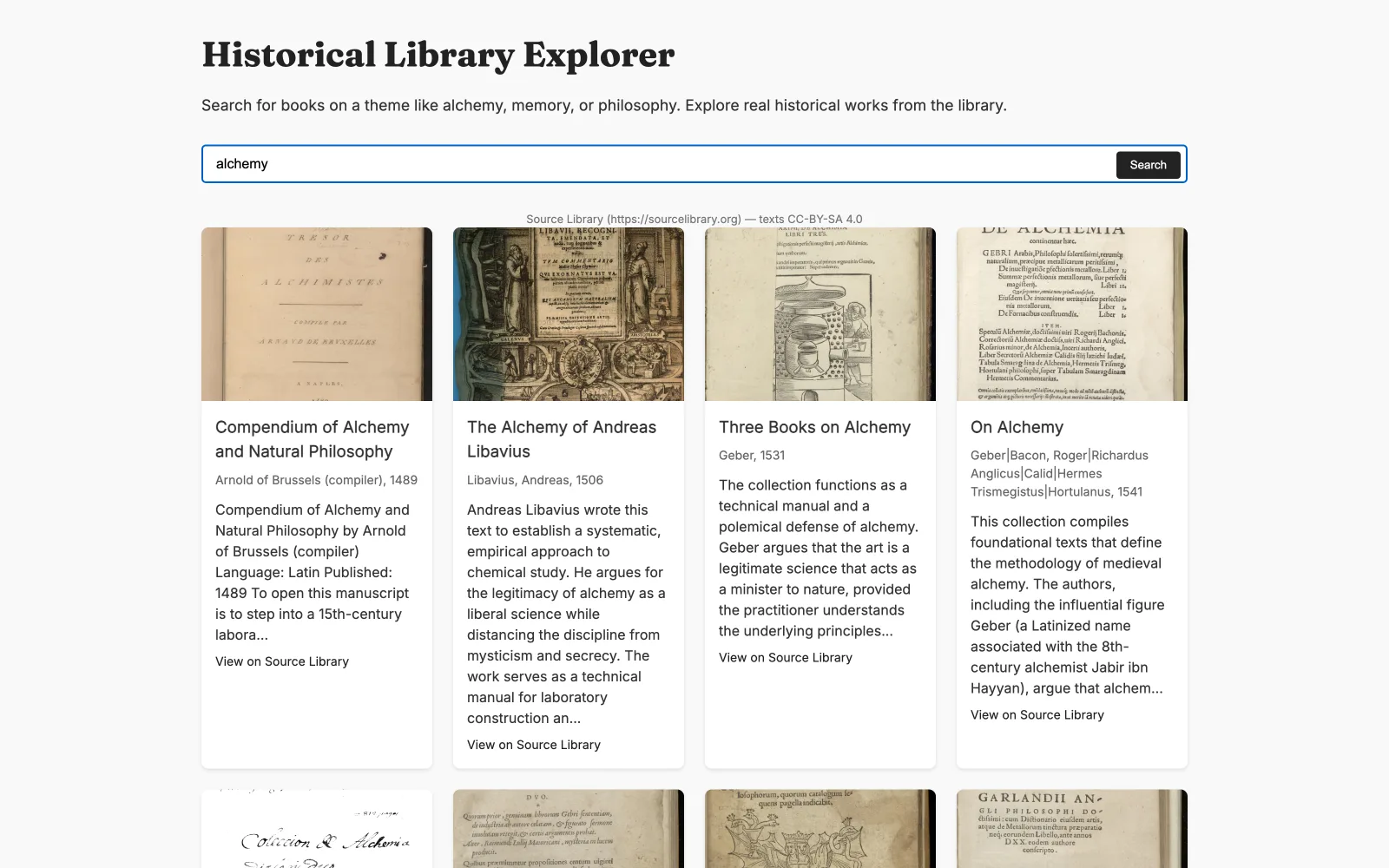
"a search explorer for the historical library" → real alchemy manuscripts, cover scans and citation links, live from the corpus
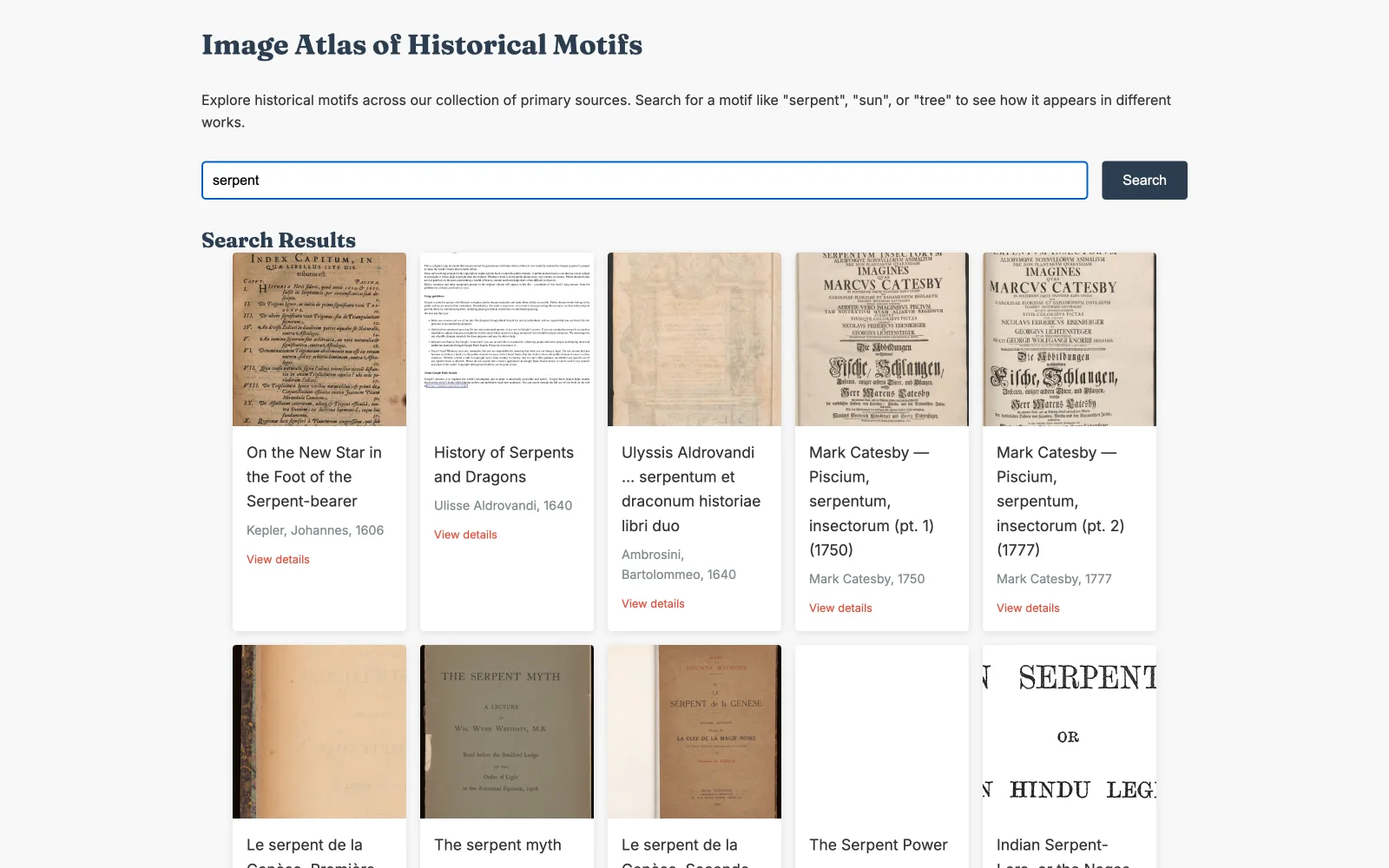
"a warburg-style image atlas of a motif" → real serpent works, page scans montaged, each captioned and linked
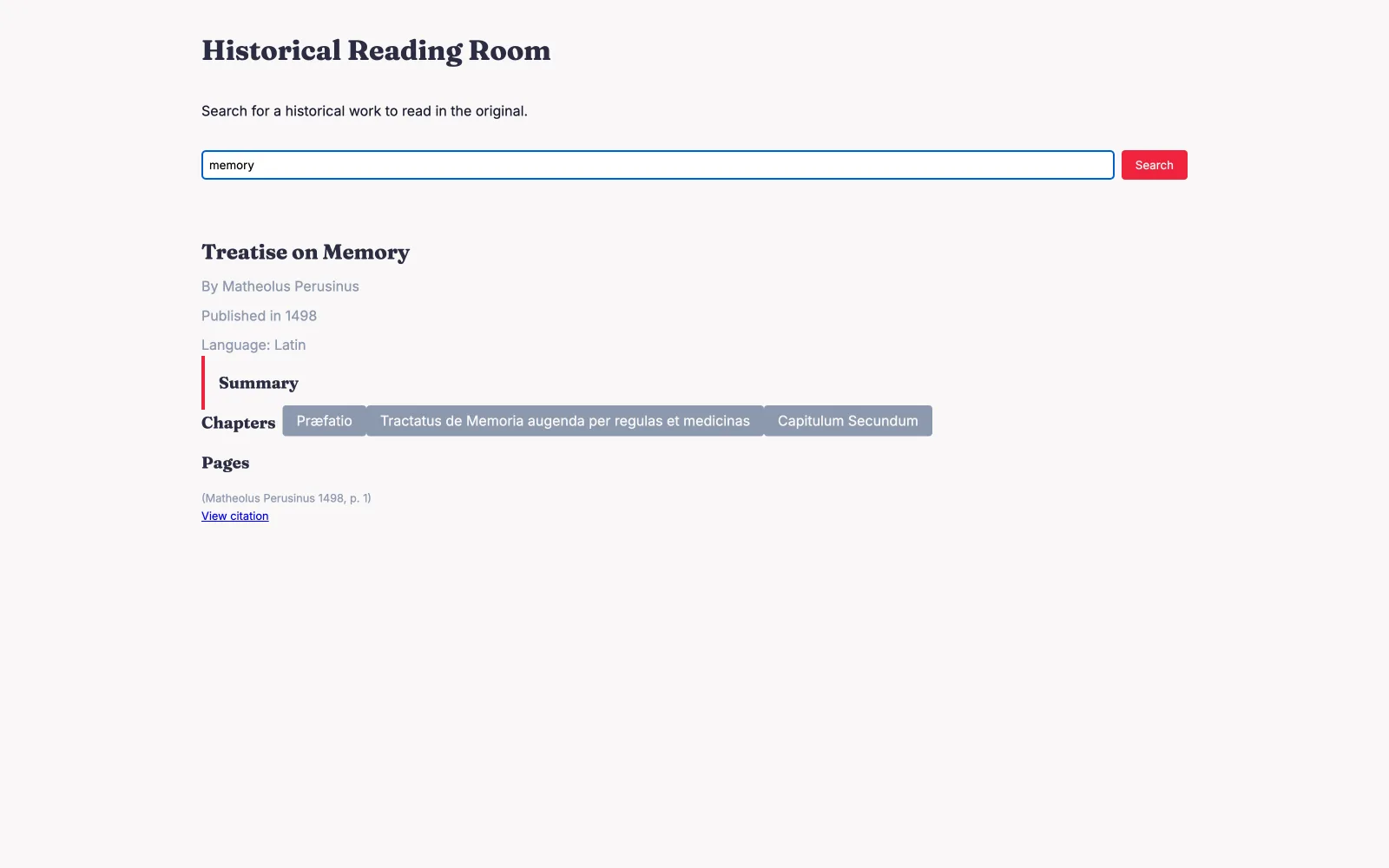
"a reading room for one manuscript" → a real 1498 latin work, its chapters and a proper citation
the sources are the point.
Behind the flavor sits Source Library — a growing European corpus of primary texts, translated and scanned, from Dürer on proportion to alchemical plates to the Hypnerotomachia. The texts are public-domain, the translations CC-BY-SA, and every build credits and links back. It's the difference between a student describing an argument and shipping a cited, sourced piece a professor would be glad to see.
approved across the whole cohort.
Student work and identity stay on European, GDPR-native infrastructure that no foreign company can switch off mid-semester. One deployment serves every seminar, and it's the AI build tool a humanities faculty can actually clear with its data-protection office.