
imagine you could build
We believe you should own your tools, and shape them to fit the way you work.
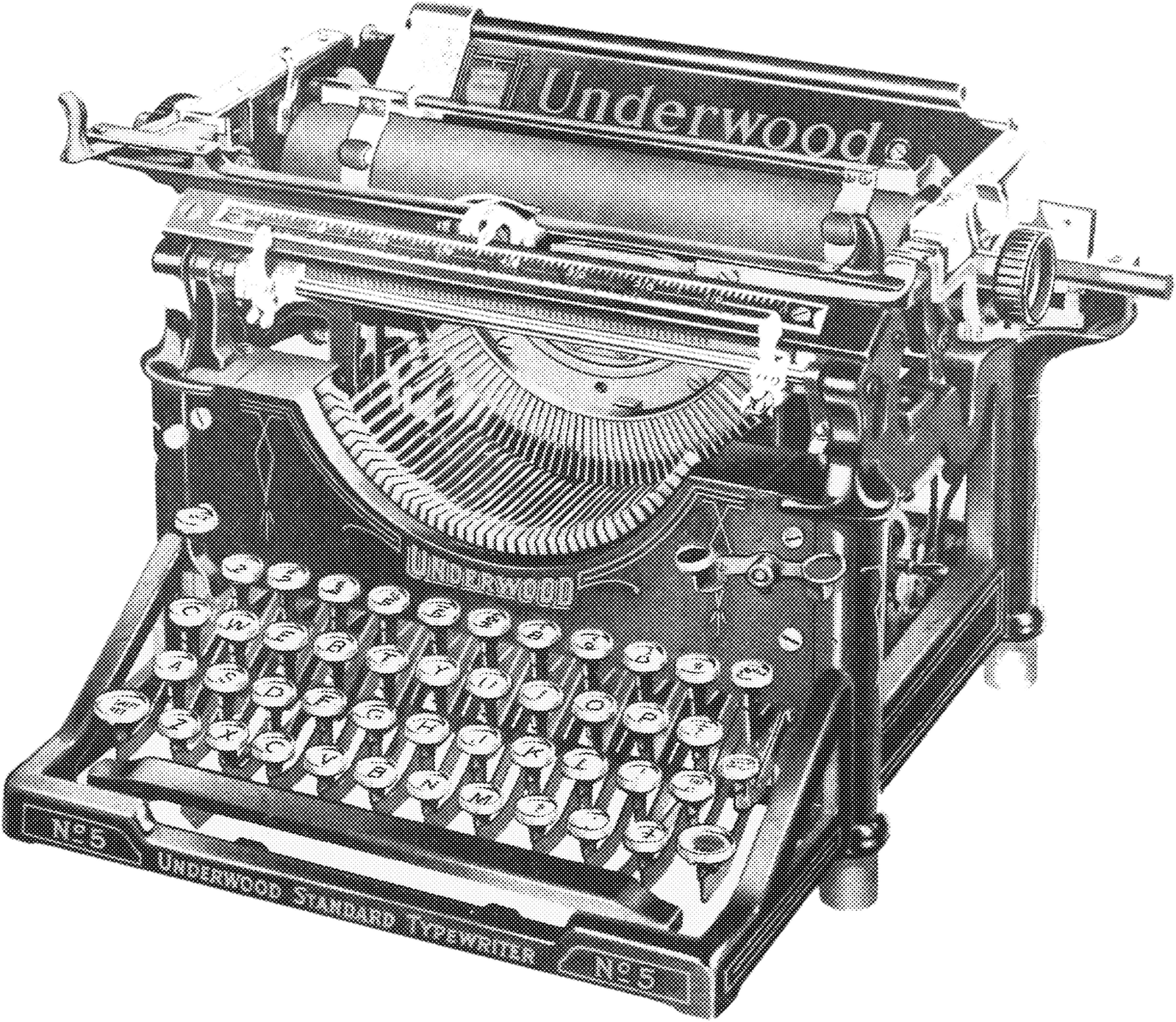
a typewriter was once a luxury.
A hundred years ago a typewriter was a machine for offices and for the people who could afford one. It took classes to learn. Then it changed how everyone worked, wrote and ran their days. AI is the same kind of machine.
We make it something anyone can use, in a form you can see and understand. And we show what it can do, so you can think wider than what exists today. It took classes to learn. Now it takes a sentence.
good tools belong in everyone’s hands.
what makemode is.
describe it, get it built.
In the browser, on the desktop or from your terminal. A page, a game, a chart from your own spreadsheet, a tool for your team: you describe the change and watch it happen.
see it work
what you make is yours.
Every build is kept with its code, exported whenever you want, and ready for the next person in your organization to pick up.
how it is kept
learn it by making something.
A workshop for a class or a team, or a five-week team build in which people ship a tool they keep. Taught by the two of us, in your building or in ours.
book a programmesee it work.
you typed: a sign-up page for my workshop, with a date and a list of namesyou got: the page next to the conversation, built in about a minute
you typed: a sign-up page for my workshopyou got: a working page at a link, built while you watch
you typed: how does satisfaction differ by age group?you got: your spreadsheet read on your own laptop, a chart as the answer
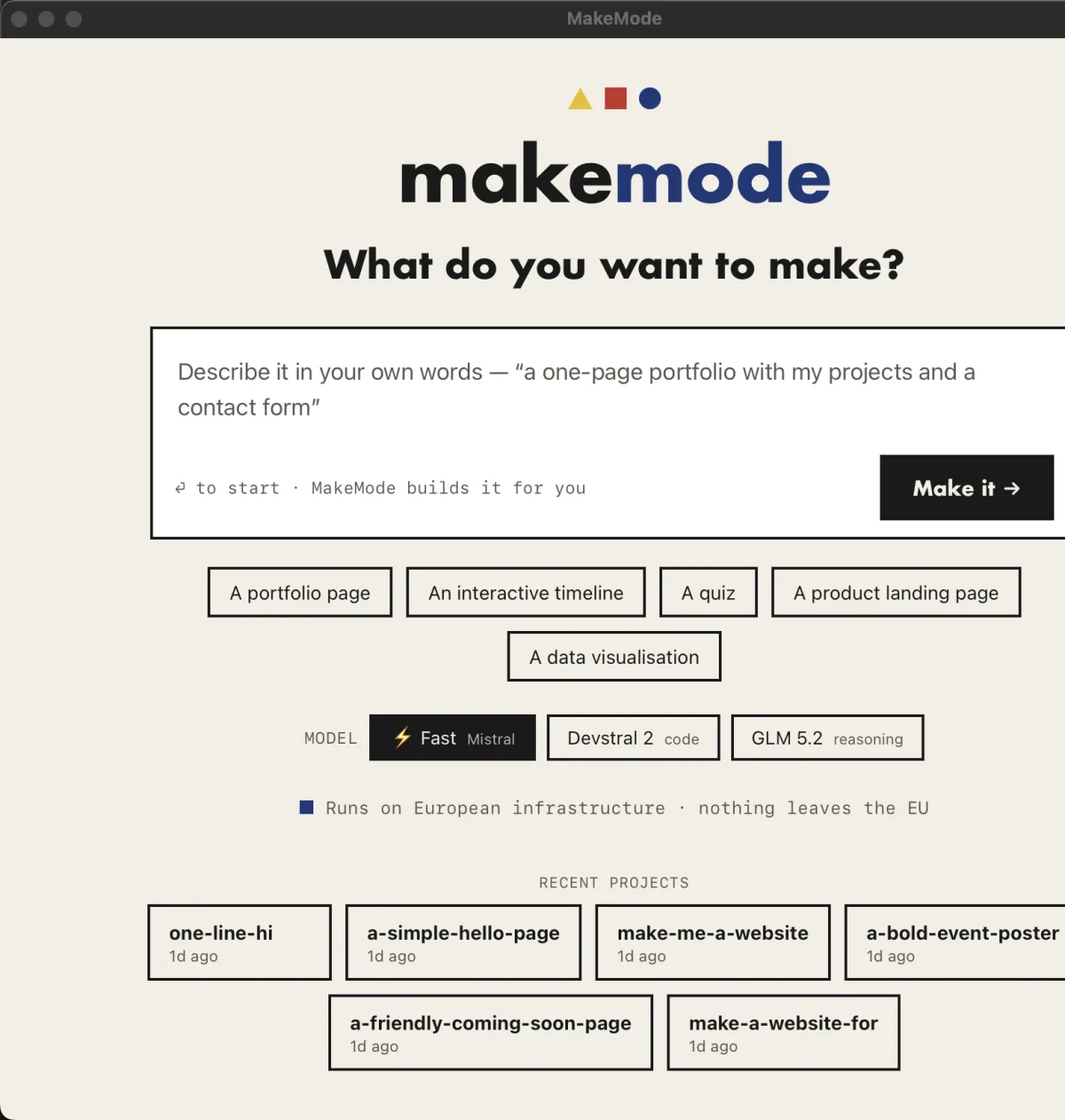
you typed: the same workspace, pointed at my own foldersyou got: the workspace in a window; confidential files never leave the machine
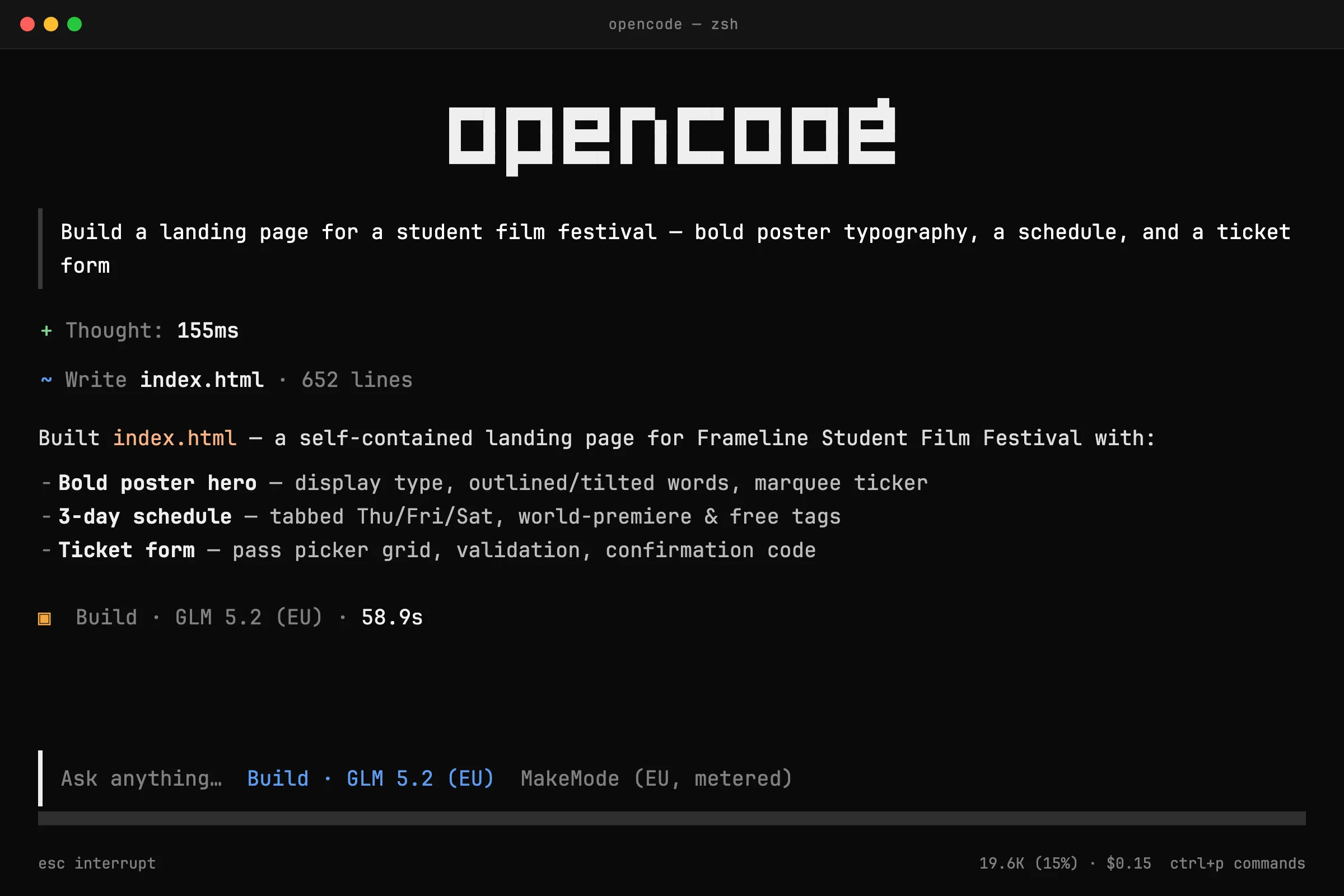
you typed: makemode open · opencode on the eu gatewayyou got: the same agent from your own tools, with your own key
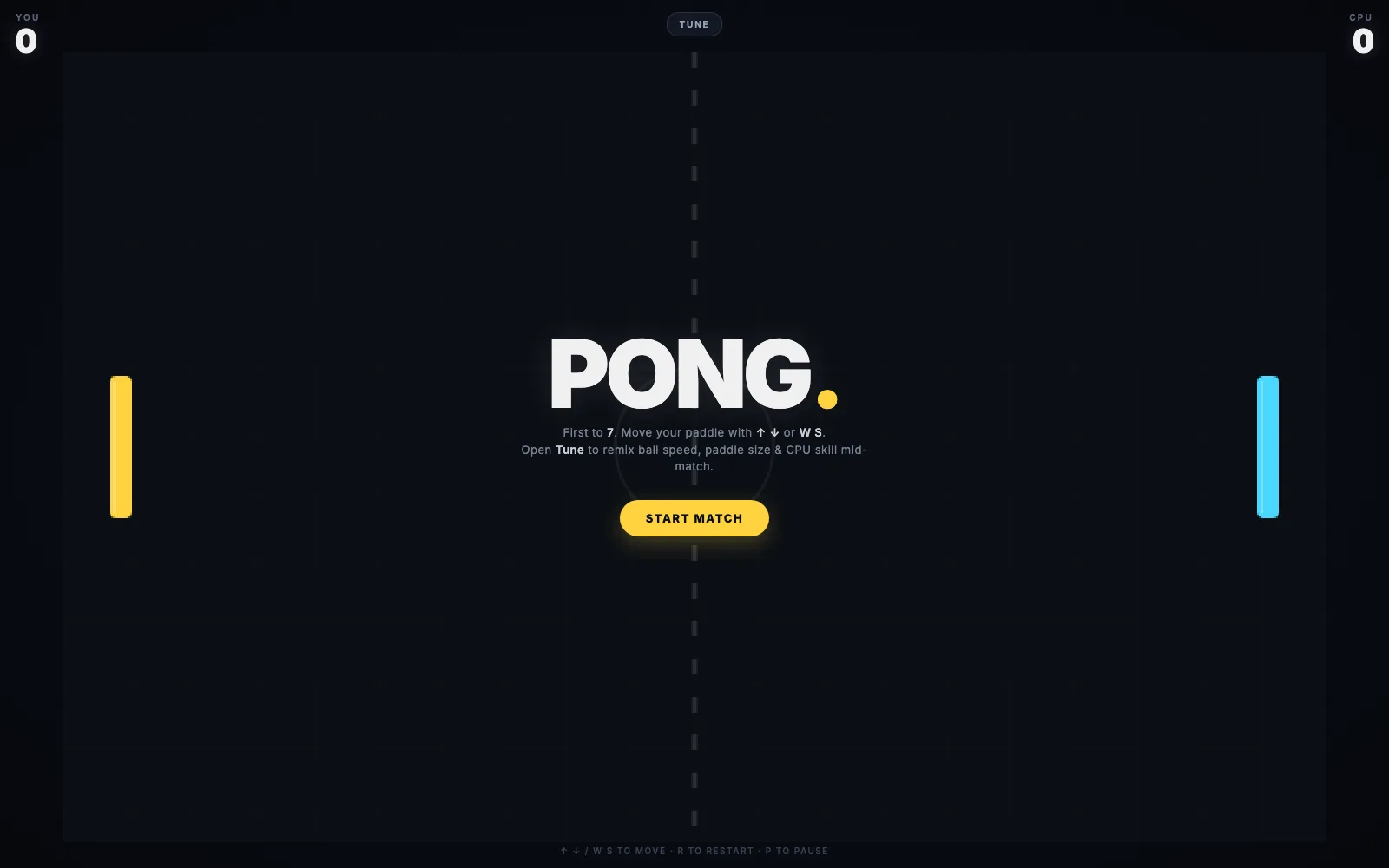
you typed: a pong game with a tune buttonyou got: built in a game-design session, tuned by describing the change
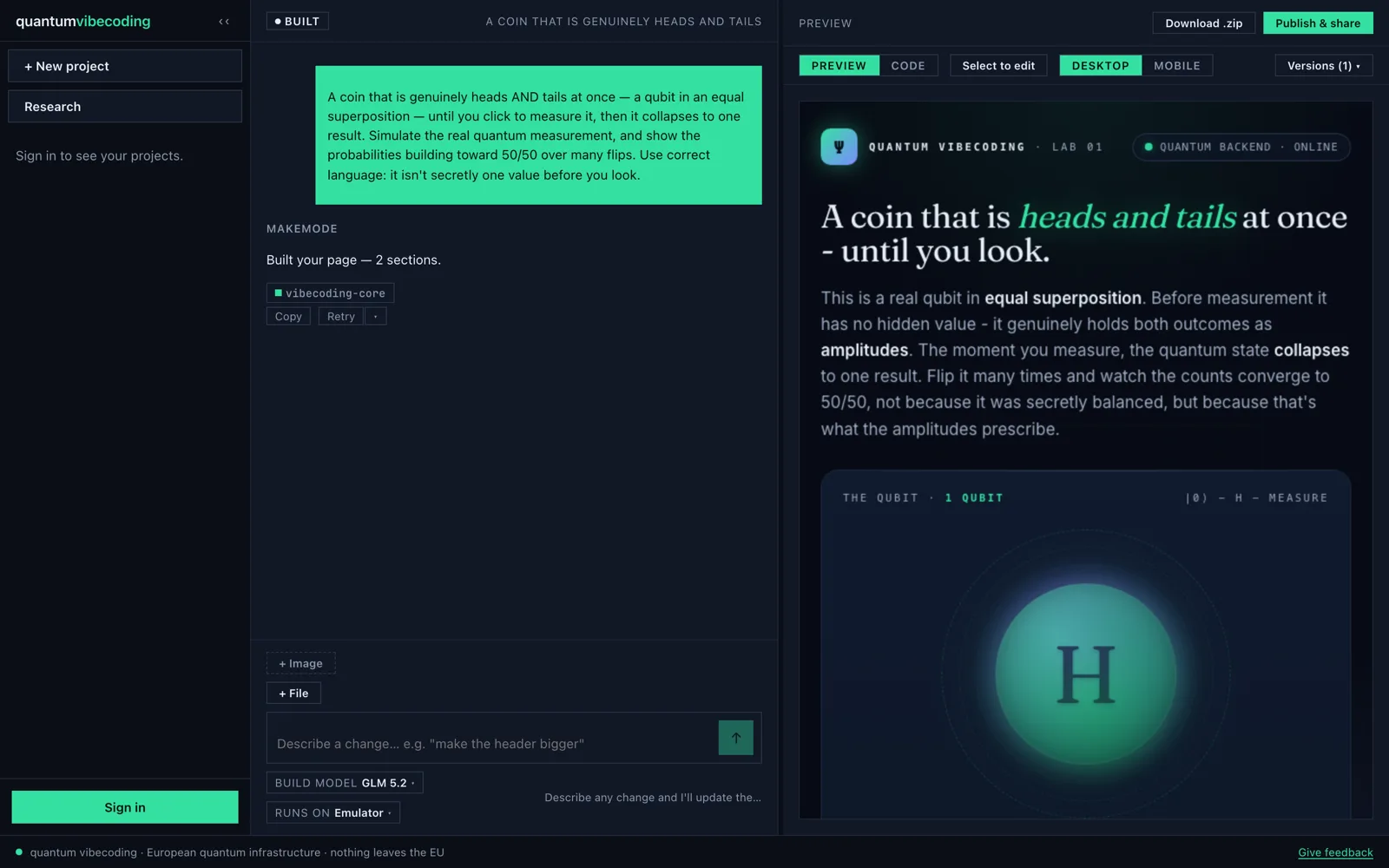
you typed: a quantum circuit, with each gate explainedyou got: a flavor for a discipline: same loop, different starting points
Weg is the next makemode, still a prototype: this is a real build, sped up while the maker works. The next two are recordings of the live product, the rest are screenshots of it.
learn by doing.
get your hands dirty.
who it is for.
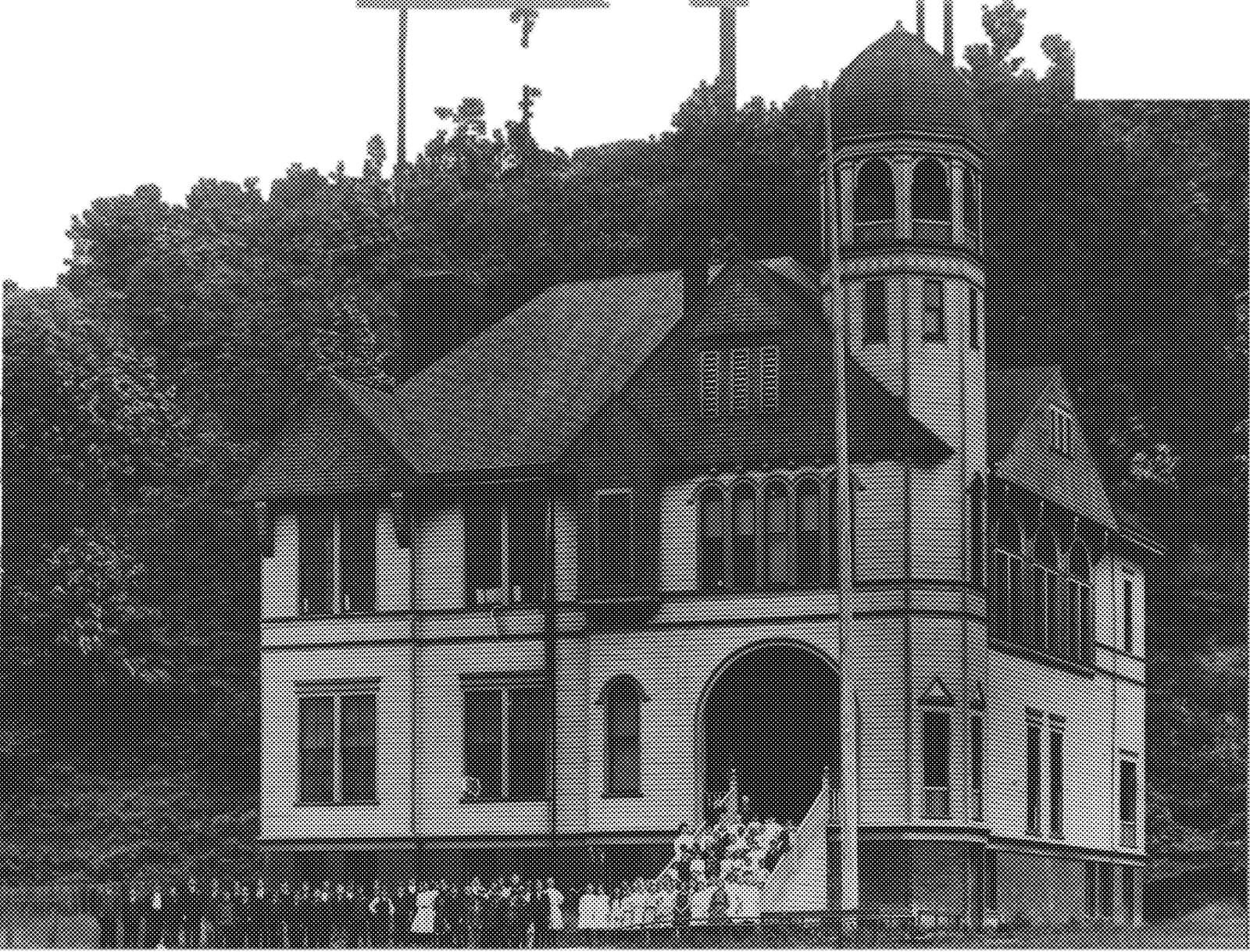
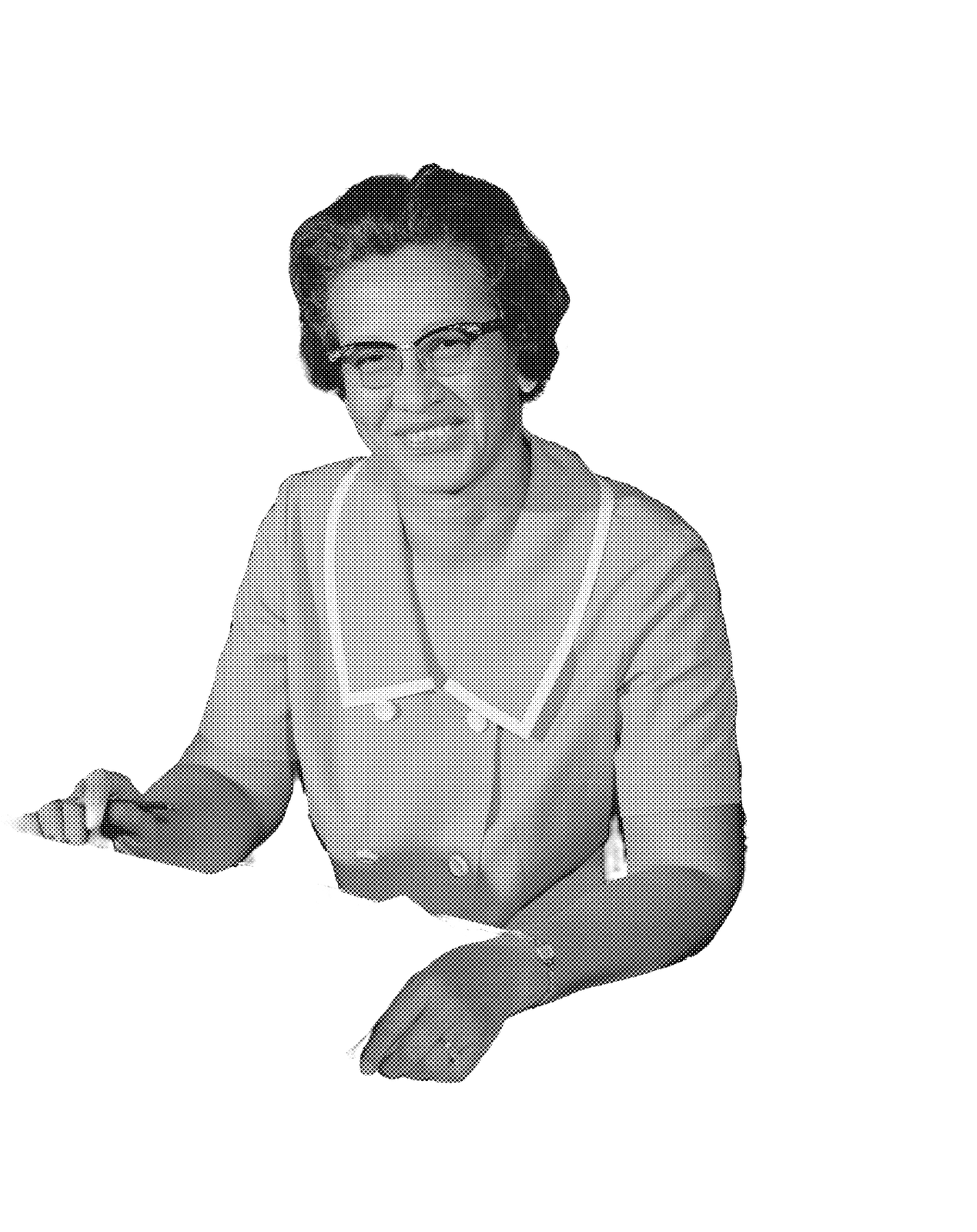
open a session for your class.
Schools and universities. A teacher opens a session, students join with a link or a code, and everyone has the same tool and the same credit, whoever they are and whatever they could pay for themselves. The work stays theirs after the course.
for educators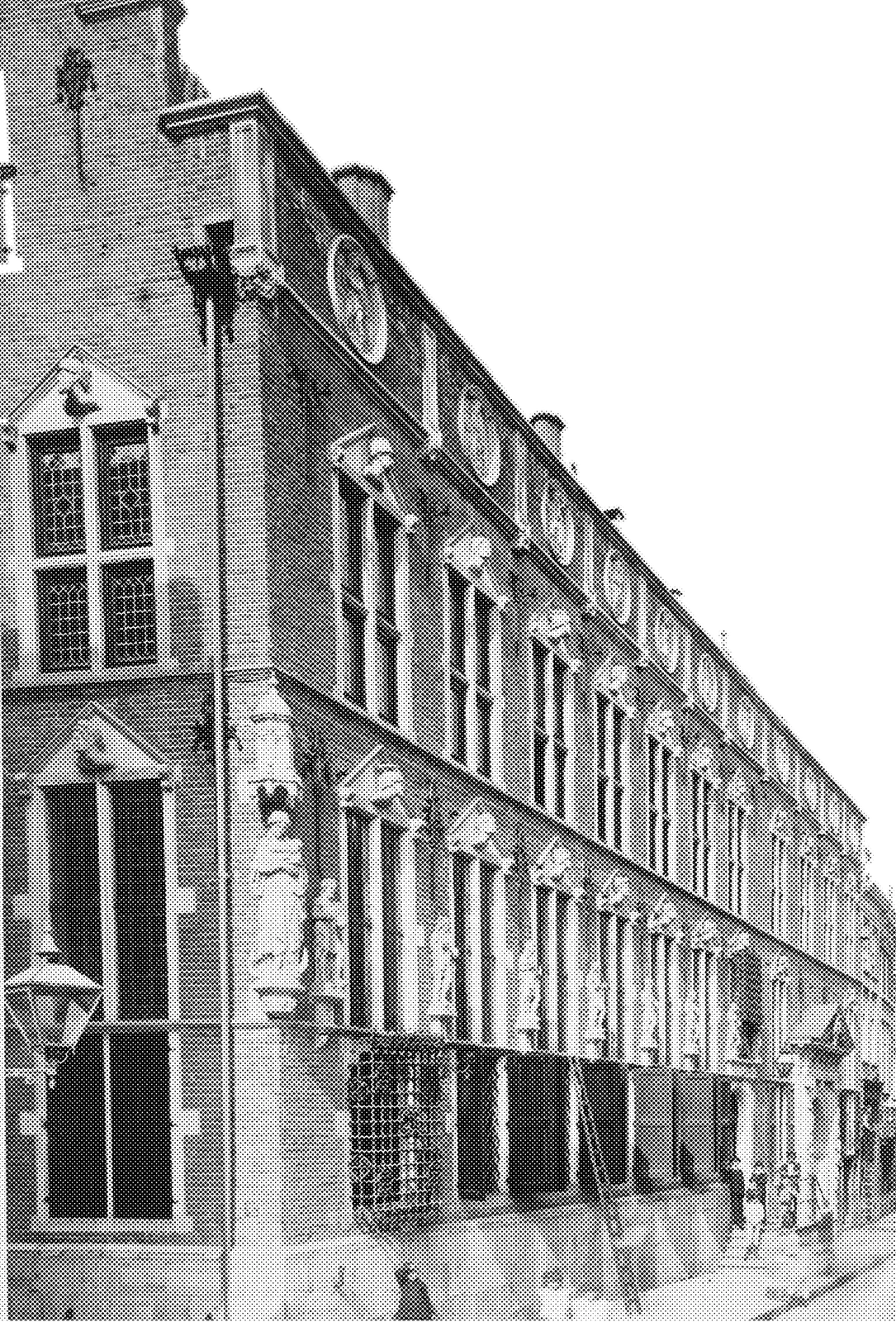
the tool you may give everyone.
Municipalities, agencies, public bodies. Build the small tools your teams keep asking for. Everyone on the team works on the same credit, and every build leaves a trace you can read. The model does its work in France, under one agreement. Start with one team.
read the trust center
start with your network.
A builder, a pharmacist, a salon, a studio, a clinic. The quickest way in is a room with people like you: a network or a branch association that books a day with us. You describe the tool you need in your own words, leave with it, and carry on from home. Your data stays with you, in Europe.
book a day for your networkthe one your organization is allowed to use.
Your identity, your code, your published work, your data: all of it on European infrastructure, under one data-processing agreement. The person who has to sign off on tools can read where every byte lives, which model did the work, and how to get everything out again. Two questions matter to that person: where the files are kept, and where the model does its thinking. For MakeMode the answer to both is France. Most people who use MakeMode never think about this. That is the point.
- models
- open-weight, and the thinking itself happens in france
- your data
- kept in the eu, never used for training
- every build
- logged, and you can read the trace
- your work
- export or delete it, any time
what you make is yours.
Making software is becoming a literacy, like typing once did. Everything you make here is yours: export it, host it, keep building on it. We ask one thing in return: share what you build. The library holds the tools, skills and pages people have already made, for you to use with peers, colleagues or friends. All of it stored in Europe.
The core of MakeMode is meant to be released as open source. That has not happened yet. Until it has, the library is where sharing happens.
- run a user study
- make sense of a dataset
- write it up properly
- make a playable game
- turn a meeting into actions
- build a real quantum experiment
become
a builder.
You learn it by building. Designing, actually. Only with your hands dirty, together, do you own what you know.
Making has never been this easy. You describe a tool and have it by the afternoon. What makes it worth having is older than any model. Who is it for, and what do they need? What does it do once it is out in the world? Those are design questions, and they are the part you bring.
writes the code.
You say what a page, a game or a tool should do. The model builds it, tries again when it fails, and shows you what it did. Once you build, you see under the hood.
ask first.
Understand the people you build for. Solve the right problem. Ask what a thing implies before you ship it. Designers are trained for this, and it is what we teach everyone else.
book a programmewhat we offer.
Three things, and you can take them on their own or together.
makemode, set up for you.
We shape the workspace around your organisation: your tools, your way of working, your data kept in Europe.
a workshop or a team build.
We come to your class, team or town hall. A day where everyone leaves with something they made, or five weeks in which your people ship a tool they keep.
learning by doing.
Little instruction, many small assignments, and time to compare what went wrong. That is where the learning is, and it is also what the AI Act asks of every organisation since August 2026.
curious?
who makes this.
MakeMode is made in Delft by two founders. Derek builds the workspace and the model gateway, Emma runs the company and teaches the programmes. It is built to outgrow both of us: a European workspace that any institution can hand to all of its people.
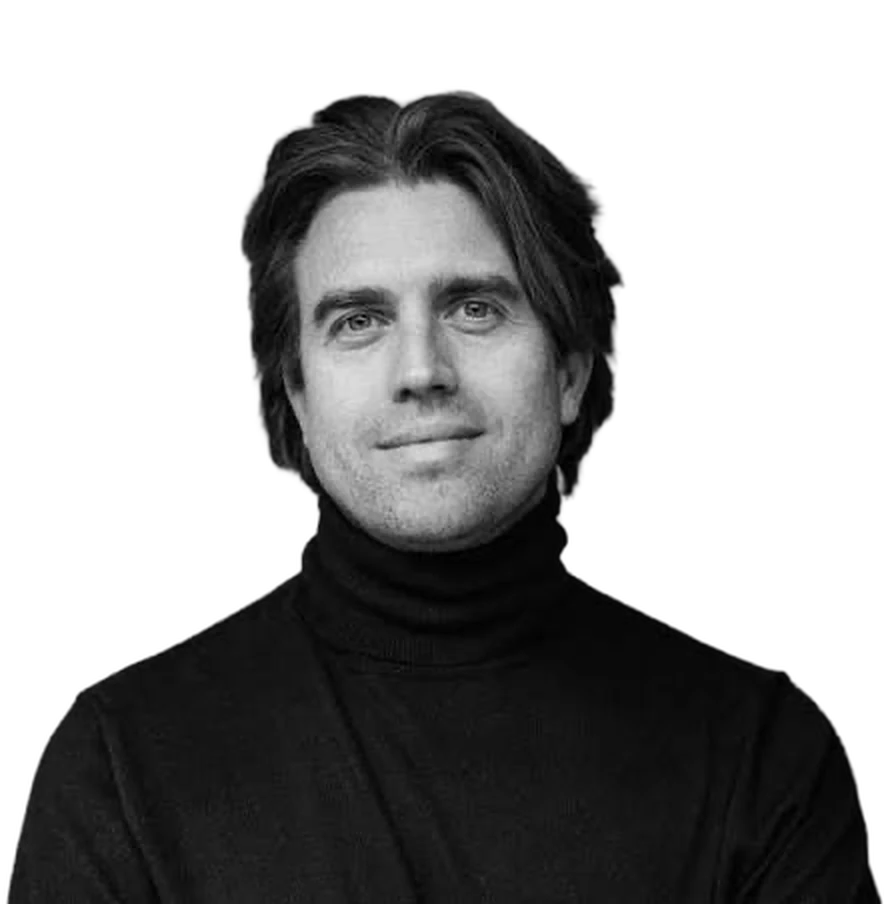
Derek Lomas
co-founderProfessor of Positive AI at TU Delft.
Co-founded Playpower Labs.
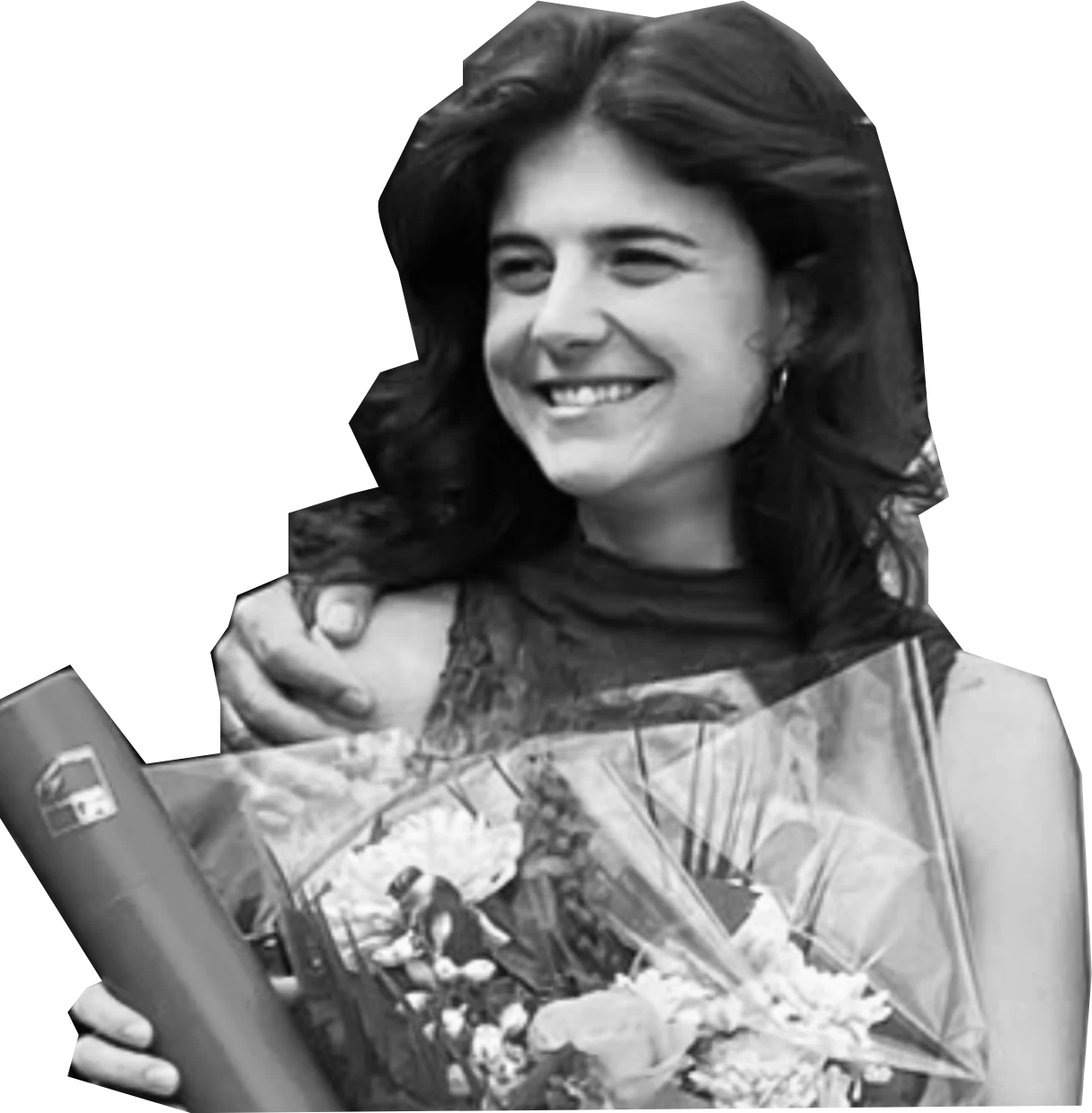
Emma Furia
co-founderDesign for Interaction, TU Delft.
Teaches people to build with AI.
Made in Delft. Runs on Scaleway, in France.